
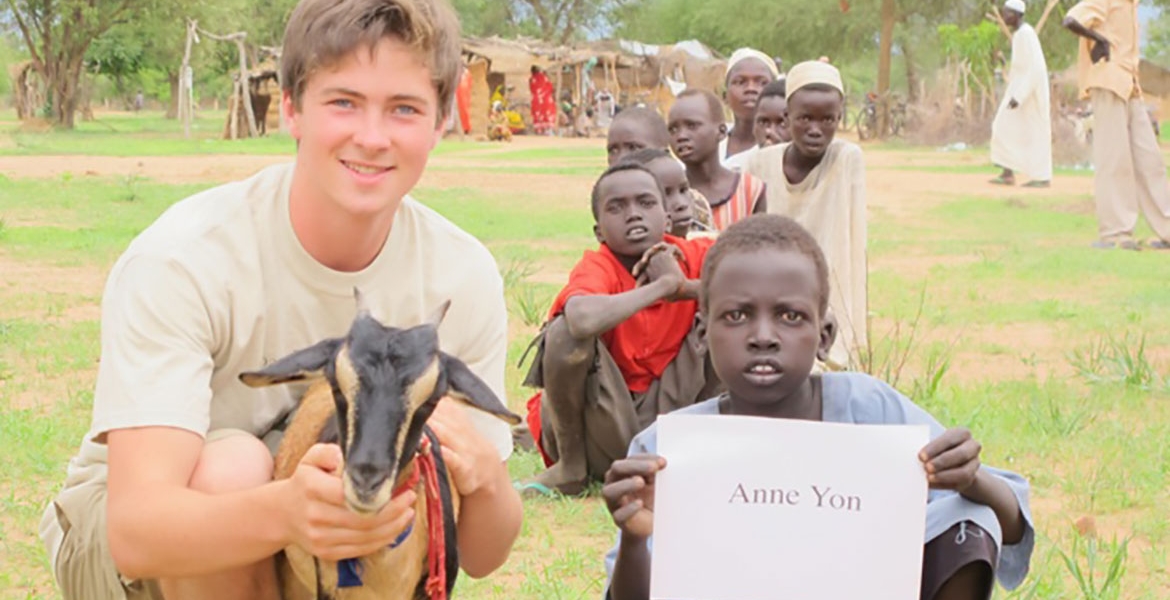
Goats for the Old Goat
The opportunity to travel with a group led by new friend Ellen Ratner, founder of the charitable organization, “Goats for the Old Goat”, arose unexpectedly. Fred was ready. Traveling to Southern Sudan (a part of which was recently called “the hungriest place on earth”) with the purpose of freeing as many of the remaining 35,000 slaves that they could, Fred never imagined what he was about to see. Ms. Ratner and the group ventured with local villagers in 108 F weather. They traveled 20 miles from the Northern to the Southern border, where they would make arrangements with a “slave retriever” for the release of as many captured slaves as their resources allowed. Over 200,000 people were originally taken to the North as slaves during the war. As these people return to the South, they have no means of support. That is where the charity changes lives. “Goats For The Old Goat” can make a world of difference. You can learn more and make a donation by visiting their website www.goatfortheoldgoat.comThose slaves fortunate enough to have been released in the exchange program waited for as many as six days to be moved to the border, with no water or food. Barely holding on, when they are finally transferred to the group, they are given medical attention on the spot. Later preparation to start a new life includes the donation of a small plot of land allotted to them, a mosquito tent to build their new homes, a pot to cook with, and 90 days ration of food and a goat of their own. Now, to most, a goat doesn’t seem like much, but to a freed slave who has endured starvation and the ravages of war, it is everything. Goats provide a first lifeline to these recently freed slaves. A she-goat can provide up to one liter of milk a day, making a difference between real nourishment and hunger. Goat milk is considered high quality protein, a good source for calcium and fat and a good source for riboflavin, which is important for the body’s energy production. Excess milk can be made into cheese and sold in the market, and she- goats have kids, building income for families and single women. One goat opens a world of survival, and allows a family to have the safety net to pursue education and micro-business. Neighbors can work together to start small local dairies. As there is no need to homogenize goat’s milk, it is simple to begin production for sale. You can learn more and make a donation by visiting their website www.goatfortheoldgoat.com